Hybrid Mode of Working: Why Coworking Spaces Are Perfect (2026)
The hybrid mode of working is a blend of in-office and remote work, providing pr...
Himanshi Malhotra
29 Apr 2026
Himanshi Malhotra
21 Apr 2026
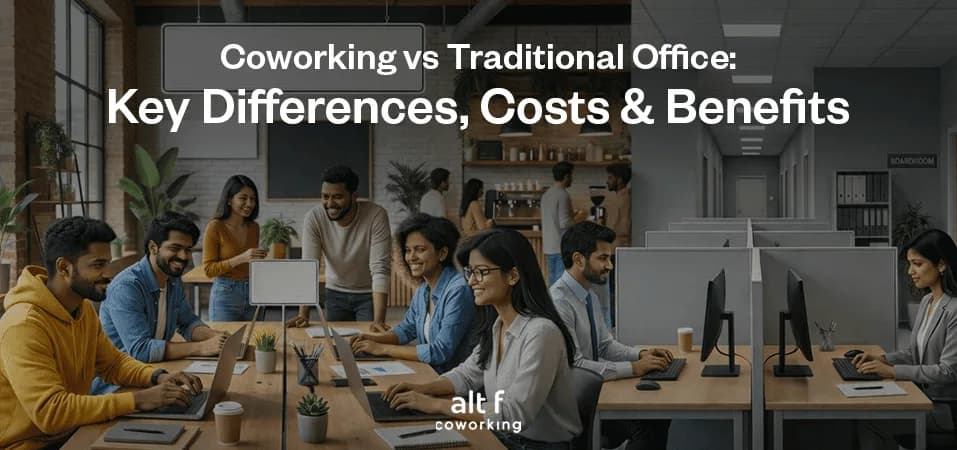
When we are talking about the comparison between coworking vs traditional office space, the differences come down to flexibility, control and cost. Shared office spaces help you eliminate the overhead costs, offer you modern amenities, flexible memberships and networking opportunities. This makes it ideal for growing teams and startups. On the other side, traditional offices provide privacy, full-brand control and stability, which is better for established, large businesses. In a traditional office space vs coworking, shared office space is the winner, while traditional offices carry the expensive overhead. Overall, it is not about which is better, it is about what suits your budget, team size and your business.
Having a traditional office means signing a long-term lease, capital investment, buying furniture and more. Today, this type of workspace is seriously questioned.
Flexible workspaces are no longer just for new businesses, JLL (Jones Lang LaSalle Incorporated) projects 30% of all global workspaces will choose flexible space by 2030. It is not a trend but a shift.
However, numbers can’t only help you make a decision. Whether coworking vs traditional office is the right fit for your business depends on your budget, team and where you're headed. This write-up will help you figure out everything.
When it's about comparing coworking vs traditional office spaces, there are many factors that come into play. Let’s take a look at the breakdown:
Coworking space: Shared office spaces help eliminate the high upfront costs, no furniture purchases, fit-out expenses or security purchases. All this is included in the monthly membership plans, which helps make the budget predictable.
Traditional office: You need to make a significant investment. Utilities, rent, cleaning, furniture and maintenance are all separate from other expenses.
Coworking membership plans are more cost-effective than renting a physical office space. Traditional office spaces generally include expenses that exceed $18,000 annually for furniture and cleaning alone.
Coworking space: Monthly membership plans allow businesses to scale up or down without spending more. This is the best option for those with fluctuating headcounts or growing teams.
Traditional office: Long-term contracts, generally of 3 to 10 years, provide you with stability, but they limit adaptability. Expanding or downsizing in between can be complex and expensive.
Coworking space: You get a vibrant atmosphere, however, if you are thinking of maintaining an organisational culture in a coworking space environment, it can be challenging.
Traditional office: With a physical office space, you get full control over the layout, brand expression and design. According to Steelcase, 96% of the leaders plan to revamp their workspaces in the next 2 years. The reason behind this is to make their offices more adaptable and flexible.
Coworking Space: When you work with professionals in the same environment from different fields, it creates potential partnerships and organic networking opportunities.
Traditional Office: Less possibility of external networking, but makes the internal team bonding strong and communication within the proper environment.
Research from Business Research Insights shows that freelancers are expected to represent over 40% of the global workspace, which will directly boost the shared workspace demand by 2027.
Coworking Space: Shared office infrastructure comes with security risks. Even though the private offices have access controlled rooms, privacy is not properly guaranteed.
Traditional office: When you have a proper single space environment, it offers you good control over the client data, internal communications and sensitive data.
As per Industry Outlook 2026 ahead, with emerging technologies like biometric access, IoT powered, environment control and more are expected to change the coworking space security landscape.
Coworking space: Fast internet, printing, communal kitchens, and meeting rooms. Wellness facilities and IT support. All this is included in one monthly fee, no worries of management overhead.
Traditional office: You have to independently source, manage, and contract, which adds to both the administrative and cost burden.
Coworking space: You can access premium addresses across different cities without being stuck in long-term leases. Best for businesses that require a professional presence in different markets at once.
Traditional office: Suitable for those companies that need full control over a certain location, near a logistics hub, regulatory body or a key client cluster.
Also Read: Why Startups Choose Coworking Spaces
When it comes to the costs of a coworking space vs traditional office, it is essential that you keep various factors in mind. Here we’ll compare things like utilities, rent, furniture, initial costs and maintenance. With this, you will get clarity on where you might save money or spend:
Coworking spaces: In a shared office space, your monthly membership plan covers utilities such as water, heating, electricity and cooling. Additionally, it includes cleaning and maintenance, which makes it easy to do budgeting and use the office without extra costs and infrastructure work.
Traditional offices: With the traditional office space, you need to handle your maintenance and utilities. You will also need to manage extra bills and service providers. Apart from this, the price can change with the time of year, how much you use and more. Moreover, if you try to fix the space, it can lead you to pay more, especially with the older buildings.
Coworking spaces: Talking about rent, coworking spaces are great for saving money, due to their flexibility. A professional can choose whatever suits them, such as private offices, dedicated cabins, shared desks and more. In India, shared office space generally starts at ₹5,000 to ₹8,000/month, depending on the location. You can easily scale up or down as your team expands, without being stuck in long-term commitments.
The cost of a shared workspace depends on the location and what is offered, however, it generally covers high-speed internet, meeting rooms and a shared cafeteria.
Traditional offices: The price of a physical office space depends on its size and where it is located. The prime locations cost more, workspaces in cities like Delhi, Gurgaon or Mumbai can start from ₹80 to ₹200 per sq ft per month. You need to sign up for long-term commitments of 3 to 10 years and can only make limited changes. This might mean that you pay for a space that you don’t need anymore or require more space before your long-term lease is over. Other than this, generally the rent does not include extra services, so you all need to plan for internet, utilities and more.
Coworking spaces: Shared workspaces are ready-to-use spaces, with all the furniture you require, like chairs and desks. This means you don’t have to pay up front, you can use that money for other important parts of your business. You not only get ergonomic furniture, but the furniture is designed for productivity and comfort, all without paying any extra cost.
Traditional offices: Setting up a physical office can be expensive. You will need to buy everything on your own, such as decor, desks, and overall, you need to build a space that fits your brand. If you require custom furniture or special equipment, you have to pay even more. Apart from this, there is a big expense of IT setup, such as security and servers, which shared office spaces generally cover.
Both traditional office space vs coworking setups come with their own set of advantages and disadvantages. Here, take a look at the pros and cons of each, so that you can decide which one is best for you. To know more, check out the benefits of coworking spaces that make it a great choice for small businesses and startups.
Cost savings: Shared office spaces do not require large security deposits, furniture investments or fit-out expenses. Businesses just pay for a single monthly membership plan, making it easy for them to get started without spending high upfront costs.
Modern amenities included: Most of the membership plans offer high-speed internet, printing facilities, meeting rooms and a common cafeteria, all this under one plan. There are no such surprise utility bills or separate vendor contracts.
Remote work support: Coworking spaces offer a professional environment for remote workers who no longer want to work from home. Many reliable providers like alt.f coworking offer multiple shared office spaces, so the professionals can work from anywhere.
Flexible lease terms: Shared office spaces provide flexible agreements, which allow businesses to scale up or down based on the project needs or team size. This eliminates the risk of being stuck in rigid, long contracts.
Networking opportunities: When you are surrounded by professionals from various industries, it comes up with natural opportunities for referrals, collaboration and partnerships that a physical office can’t replicate. Many coworking spaces like alt.f coworking host workshops, networking sessions and events to make better formal connections.
Potential distractions: Coworking spaces are usually surrounded by noises like phone calls, conversations and movement. This makes it challenging to focus on work. Professionals who choose to have quieter environments may find it hard to work in a shared workspace.
Limited customisation: Professionals cannot brand or redesign the space to showcase their business identity. The surroundings of a coworking space are controlled by the operator, which makes it difficult for personalisation.
Higher Costs for larger teams: While it is a cost-effective option for small teams, with a larger team count, a traditional office space becomes a more economical choice.
Long-Term Stability: A physical office offers you a permanent, fixed base with a consistent location and predictable overheads. This type of stability helps professionals build an established routine for the entire team.
Improved Brand Image: A proper office space with branded signage and custom interiors showcases professionalism to partners and clients.
Privacy and Security: A single-company space provides you with full control over the entire space. This is especially essential for industries like finance, healthcare and legal that need to handle confidential data.
Enhanced Productivity: A controlled business environment minimises distractions and noise than a coworking space. Professionals can work without distractions, being present in the workflow and company culture.
Higher Overhead Costs: Before businesses start their work, they experience significant expenses. These expenses include furniture, security deposits, technology setup and fit-out costs. These prices can go up to thousands before you hire a single employee.
Long-term lease: Physical office contracts generally run for three to ten years, this rigidity makes it complicated to expand, change location or downsize without incurring significant costs.
Less networking opportunities: When you work in a single-company environment, it restricts your organic connections with professionals from different industries.
Choosing between a traditional office and coworking is an overwhelming decision. alt.f coworking bridges this gap by offering premium, managed office solutions that offer the flexibility of coworking space and the branding of a traditional office:
Located in prime hubs: You get a prestigious business address in India’s popular business hubs such as Delhi, Noida, Gurgaon, Hyderabad, Pune and Mumbai. You don’t have to pay massive security deposits like a physical office landlord would ask.
Great savings: According to Colliers 2026 Market Report, setting up a private office from scratch can cost you around ₹3,500 per square foot. Choosing alt.f coworking space saves you the entire cost, letting you spend on other important aspects of your business.
Everything is ready: The alt.f shared office spaces are "plug-and-play." From ergonomic furniture to high-speed internet and 24/7 power backup, we ensure you can work smoothly.
At the end of the day, there is nothing like perfect, it is just the one that suits your business at present. If you are a startup or a growing business that is simply tired of traditional office overhead costs, coworking space offers freedom to easily scale up or down without paying extra. Apart from this, if you are running an established, large team that values privacy, consistency and a space, a physical office setup makes more sense.
What’s exactly changed is that no one has to choose between professionalism and flexibility. Reliable providers like alt.f coworking have made it possible by offering fully-equipped, premium offices in prime locations without capital investment and long-term contracts.
So, before you choose anything, ask yourself: what exactly does your team need to do to give their best? This will help you choose the right workspace solution.
The hybrid mode of working is a blend of in-office and remote work, providing pr...
Himanshi Malhotra
29 Apr 2026
When we are talking about the comparison between coworking vs traditional office...
Himanshi Malhotra
21 Apr 2026
Shared office spaces have become a game-changer for startups and MSMEs in 2026, ...
Himanshi Malhotra
07 Apr 2026
Everything you need to know, all in one place.
Setting up a Global Capability Center in India is one of the biggest and smartes...
Himanshi Malhotra
30 Apr 2026
The hybrid mode of working is a blend of in-office and remote work, providing pr...
Himanshi Malhotra
29 Apr 2026
Shared office spaces have become a game-changer for startups and MSMEs in 2026, ...
Himanshi Malhotra
07 Apr 2026
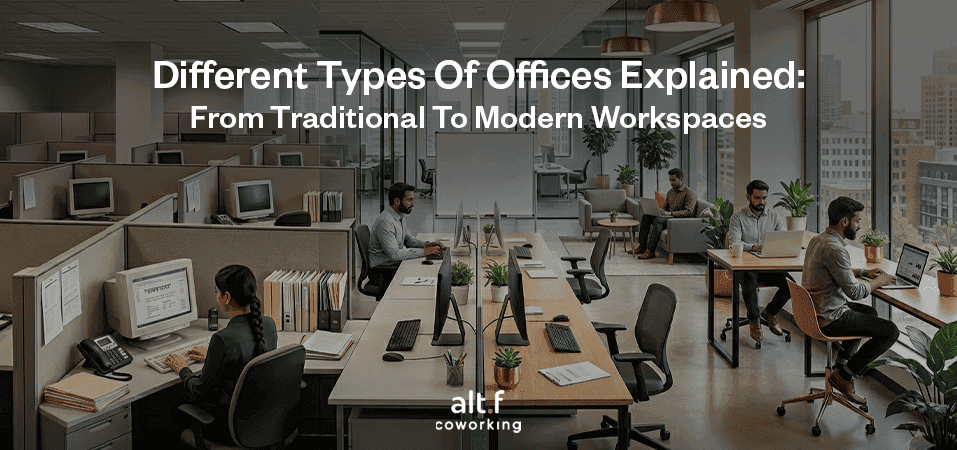
When it comes to building a productive workspace, knowing the types of office sp...
Himanshi Malhotra
02 Apr 2026
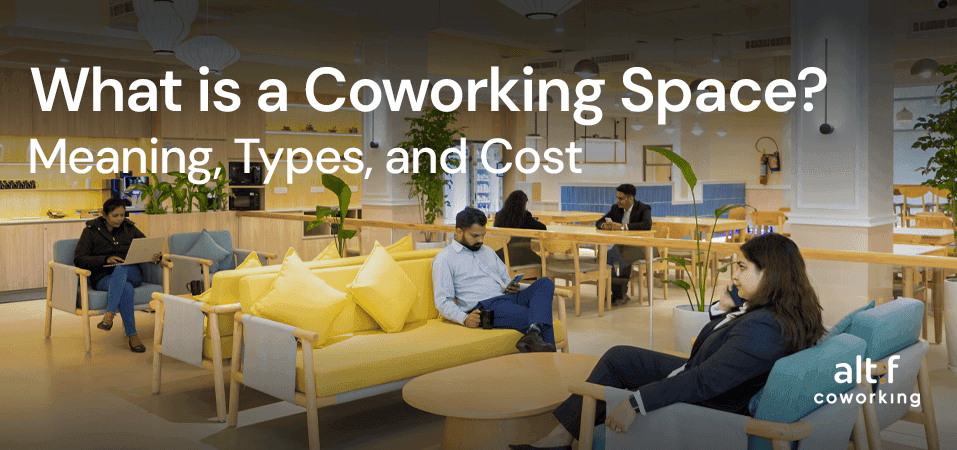
A coworking space is a fully-equipped workspace that offers flexible membership ...
Himanshi Malhotra
31 Mar 2026