Hybrid Mode of Working: Why Coworking Spaces Are Perfect (2026)
The hybrid mode of working is a blend of in-office and remote work, providing pr...
Himanshi Malhotra
29 Apr 2026
Shraddha Thakur
15 Jan 2026
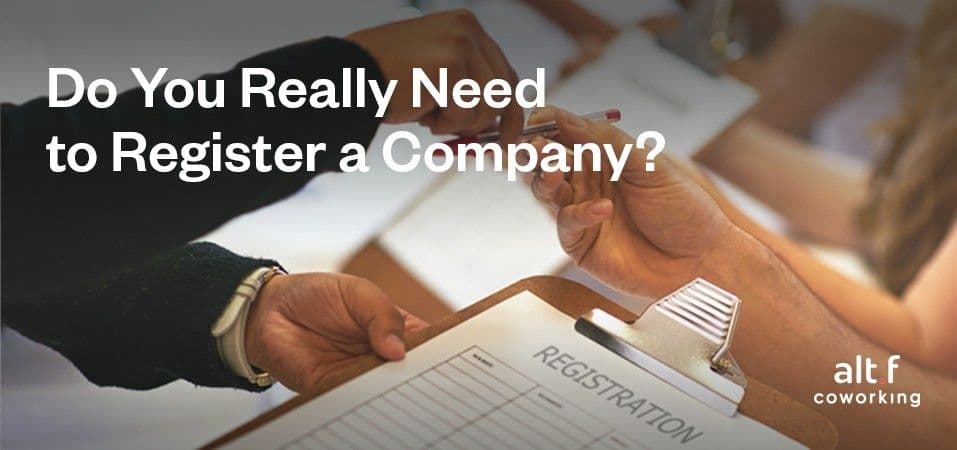
You do not have to start up a company immediately. Working as an individual or sole proprietor can generally be sufficient for testing an idea, freelancing, or earning a small, irregular income. Registering early may lead to unnecessary expenses and administrative costs before you are even sure the business will work. Registration becomes important when your business starts growing, you earn regularly, clients ask for invoices or GST bills, you want to hire people, or you plan to raise money. Formal business at this level simplifies doing business with clients, banks, and investors. Making the right choice at the right time is crucial. Sole ownership is ideal for solo work, an LLP is ideal for very small groups, and a PLC is ideal when a business organization intends to increase investment. These options belong to two different stages. The actual error is one: either registering too early under pressure, or missing opportunities because of waiting too long. The support tool is the company's registration, not its success. It is only important to create something that people can spend their money on.
You have most likely experienced this.
You're working on an idea. Perhaps you have created a landing page. Perhaps someone has already compensated you. Then someone by chance asks, "Is this company registered?
That one question alone can make founders feel like they are already behind.
Then suddenly, googling the company registration in India, opening CA websites, reading about Private Limited companies, LLPs, GST, compliance, and wondering why you have not done this before, or if you’re doing something wrong.
Here is the simple truth that most founders do not have at the beginning of the journey: you don’t always need to register a company immediately. Eventually, there comes a time when not registering can get in your way. The hard challenge is knowing when that time comes.
Many new founders think company registration is what makes a business “serious” or “real.” Once you have the paperwork, the idea becomes valid. In fact, many well-known new businesses spent their early months just trying out ideas, talking to customers, and fixing problems, without registering a company.
On the other hand, there are founders who take too long to register and end up rushing to grab opportunities as they appear. One of the clients requests a GST invoice. An investor requests incorporation information. A prospective employee would require a letter of offer signed on the firm's letterhead. Then, suddenly, the unrestricted lack of registration is not freedom, but friction.
So, shall we make this simpler?
In case you have yet to prove your idea out, freelance or consulting, pilot projects, or any other little and irregular income, then you do not need to register a company yet. It is legal to operate as an individual or a sole proprietor in India. You are able to receive money, accomplish work and understand what the market really desires without putting up the entire law structure.
In the early stage, registering a company often creates extra work. You pay incorporation costs, monthly accounts, compliance, and GST returns before you even determine whether the business will be in operation six months later. The amount of energy possessed by a founder is limited, and document paperwork is a horrible place to spend it at an early stage.
Registration becomes important when your business is no longer just you “trying something out” and starts working like a real business.
If you are earning a regular income, clients want proper invoices, or if you want to bring people on to your team, building a company becomes useful. It’s not because the law suddenly drives you, but because everyone around you works better when there is an official company. Clients, suppliers, banks, and investors all prefer working with a registered company.
Funding is the easiest example. If you plan to raise money from angel investors or VCs, a Private Limited company is required. Investors want clear ownership, shares, and the right legal documents. They won’t invest in an idea that is running through a personal bank account.
Hiring is a major milestone. The moment you start giving offer letters, paying salaries, or talking about ESOPs (Employee Stock Options), running the business without registration becomes risky. At this point, keeping a clear line between you and the business is no longer optional.
A lot of founders make a common mistake here. The problem is not registering too late, but picking the wrong business structure.
They go straight to a Private Limited company because that’s what startup Twitter talks about, even when their business doesn’t need it yet. For many self-funded founders, consultants, and small teams, an LLP makes much more sense. Fewer rules to follow, protection from personal risk, and enough setup to work professionally without getting covered in paperwork.
When you sign up your business, focus on the one you are running right now, not the one you hope to have in the future.
If you work by yourself as a consultant, a sole proprietorship might be enough. If you have a small team giving services, an LLP could be a good choice. If you want to grow your product and bring in investors, a Private Limited company is the way to go. None of these options is better than the others. They are just different ways to start your business.
The real mistake is signing up your business too soon because you are nervous, or waiting too long because you keep delaying it.
Another common mistake founders make is mixing personal and business money for too long. Even if your business is not officially set up yet, it is important to keep track of money coming in, money going out, and taxes correctly. Additionally, it's important to pay attention to GST rules before, as otherwise it can cause problems if a client asks for a GST bill before paying.
That’s why it helps to have a good accountant from the beginning. They can explain things clearly, not just help you follow the rules. Even one meeting can save you months of confusion and prevent you from making unnecessary changes.
And sometimes, the best advice does not even come from experts. It comes from other founders. Making connections with people in founder groups, shared offices, and peer groups like those at alt.f coworking often gives you real, helpful information about what people signed up for, when they did so, and what they would do differently.
So if you’re thinking whether you should start a company right now, here’s the simple answer.
You need to do it when your business needs more organisation, like when you start making money, getting customers, hiring people, or looking for money from others. You are not a founder just because you have registered your business. Creating something people want to buy does.
See registering your company as something useful, not as a big reward. Do it when it helps you move forward, not when it distracts you from developing your business.
Choosing the right time to register, more than the company setup itself, is what makes some founders calm and others always stressed.
The hybrid mode of working is a blend of in-office and remote work, providing pr...
Himanshi Malhotra
29 Apr 2026
When we are talking about the comparison between coworking vs traditional office...
Himanshi Malhotra
21 Apr 2026
Shared office spaces have become a game-changer for startups and MSMEs in 2026, ...
Himanshi Malhotra
07 Apr 2026
Setting up a Global Capability Center in India is one of the biggest and smartes...

Himanshi Malhotra
30 Apr 2026
The hybrid mode of working is a blend of in-office and remote work, providing pr...
Himanshi Malhotra
29 Apr 2026
When we are talking about the comparison between coworking vs traditional office...
Himanshi Malhotra
21 Apr 2026
Shared office spaces have become a game-changer for startups and MSMEs in 2026, ...
Himanshi Malhotra
07 Apr 2026
When it comes to building a productive workspace, knowing the types of office sp...
Himanshi Malhotra
02 Apr 2026