Hybrid Mode of Working: Why Coworking Spaces Are Perfect (2026)
The hybrid mode of working is a blend of in-office and remote work, providing pr...

Himanshi Malhotra
29 Apr 2026
Parul Pathania
30 Jun 2025
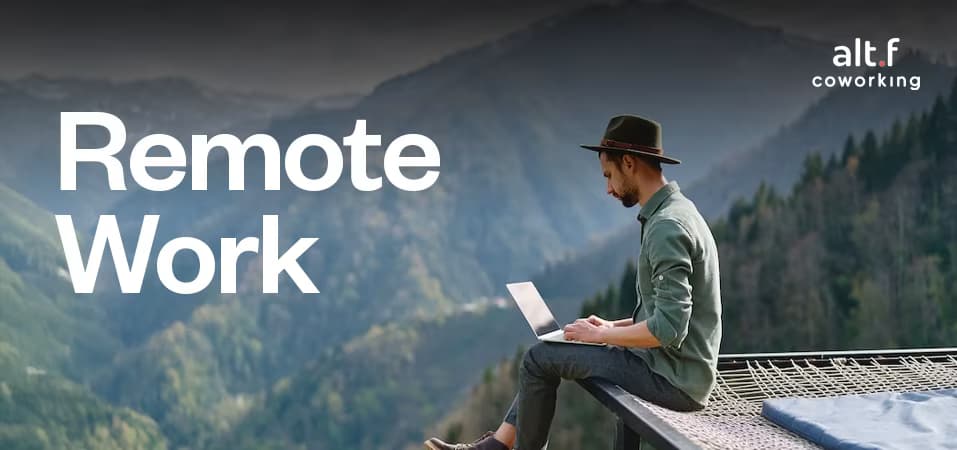
Remote work is changing from an upscale setup to a standard way of working. It is revolutionizing the way people and companies operate. Essentially, remote work allows individuals to contribute their input to any location in this world, be it home, coffee shops, vacation, coworking spaces, etc. This has practically been achievable with the assistance of sophisticated digital resources and uncomplicated connectivity. If a list of its benefits is to be created, it would be a lengthy one. They are work-life balance, improved productivity, cost savings, and international access to leading companies for workers, and lower operational expenses, access to international talent, and better employee retention for companies. But some challenges must be met in order to contain the drawbacks of remote work. The general negatives are social isolation, distractions, blurry boundaries, communication accidents, and cybersecurity risks. It should also be mentioned that certain types of work are more suited to the remote work bracket. These are IT, marketing, design, education, and customer service. To utilize this model properly, one needs to establish a proper routine, ensure that everything is well communicated, and own well-being takes precedence. The idea of coworking spaces, such as alt.f coworking, has been brought forward to fill the vacuum between conventional office arrangements and contemporary work-from-home arrangements. These coworking spaces have adaptable, distraction-free, and professional settings. It is possible to mingle the independence of remote work with the framework of an office. Concluding, the tendency of remote work is irreversible and does not riot in time. Under the right strategies with support systems it holds a better world of work that will be dynamic, inclusive, resilient and brighter.
There has been a tectonic shift in the way we work. This form of work, once the prerogative of an elite clan of digital nomads or a specific high-tech remote job, has come to be the dream of every man. 2025 is no longer about the traditional nine-to-five workday template; it is about professionals and companies opting to work remotely for its flexibility and productivity benefits. Given the changing nature of work, the corporate setup has reimagined how companies and individuals work and operate. This has sparked a new discussion around employment, collaboration, and daily business.
But what is remote work? More than buzzwords, if you want to know the remote work meaning, then you can’t survive without understanding what exactly remote jobs are, the spectrum of their pros and cons, the varied world of remote jobs, and how to truly thrive in this evolving environment.
This blog talks in detail about remote work and provides insights that are invaluable. You would find it useful in case you are a well-experienced remote worker planning to change your employment, or you are a business leader used to working in a new paradigm.
At its core, remote work meaning is a type of working setup wherein an individual employee carries out his or her work from a place other than the traditional office space. This wide definition includes work from the serenity of your home office or a coworking space, down at the local cafe, and when traveling from A to B.
The key principle is that it does not use a company-owned desk. This model is known by various names, such as work from home or online work from home, because digital means are being used for communication.
The foundation for success with remote work is technology. There is an emphasis to be placed on proper internet connection, cloud-based programs, video conferencing applications such as Zoom, Google Meet, messaging, and other types of project management apps such as Asana and Trello. All of these are enabling us to communicate and collaborate even from miles apart.
Remote work is not the same as flexible hours (though you certainly have those with remote work); the difference is that work and office are no longer synonymous with place. It does not matter if your work schedule is aligned with traditional 9–5 timings; the most identifying feature of remote work is that you are to work without being physically present in the office. Individuals and businesses with their own workspace solution are also empowered to access talent pools that previously lay outside their reach because of the freedom that it offers.
There has been a growing trend where many organizations have started opting for remote work. This is not merely a consequence of circumstances, but rather is a result of the list of advantages that benefit both employees and employers. Let us have a look at the various benefits of working remotely.
One thing that is the main highlight of remote work is the work-life balance. When you are working from home, the time that you waste on daily travel gets eliminated. This leads to saved time, energy, and finances. The choice will be there to reinvest this time on individual hobbies, family-related matters, or just to relax. This essentially has a positive impact on the quality of life and reduces overall stress.
There have been significant doubts when it comes to productivity in remote work. However, as the adoption rate (71% of full-time employees wanting to work remotely) is increasing, people are becoming more productive when they are working from home. This is mainly because you are particularly away from office distractions like impromptu chats and constant interruptions. Also, at home, you can possibly create a personalised work environment, which is customised to your concentration needs. These are the reasons why you would be able to structure your day around your peak productivity hours, which will lead to more focused work and higher output.
There are a lot more advantages in terms of financial management. You will save a lot of money as your expenses will get cut down due to decreased travel receipts, vehicle maintenance, and professional clothes. If you save on these aspects, you are more likely to translate these into more disposable income and savings.
When you work from home, you get more control over your day-to-day tasks, schedules, and work environments. If you get such autonomy, it is natural that you like to work more. This will lead to increased job satisfaction, good ownership of their work, and eventually increased loyalty to their work organization.
When you work remotely, the biggest obstacle of location ceases to exist. You will no longer be confined to the physical location of a job opportunity. Such a thing opens up greater opportunities for individuals. You will be able to apply all across the globe as your job will not require relocation.
One of the most strategically advantageous features of remote working for businesses might very well be the availability of a worldwide talent pool to officials. The companies have the luxury to choose from any radius, whatsoever. They will hire people based on their talent and not location.
The remote working infrastructure does not require extensive physical offices, which are expensive. This is done by saving money on rent, utilities, and maintenance. The money saved in all of this can be redirected towards employee development or R&D.
Offices that offer remote work are likely to have greater employee retention. If the employee is satisfied, it will build trust, satisfaction, and loyalty. Loyal employees mean they can also reduce recruitment and training costs.
When you are happier and less stressed, chances are higher that you will have a better work-life balance and high morale. You become extremely motivated to work, reducing the rate of absenteeism from work. It leads to better schedule management, high productivity, and a better organizational culture.
Working remotely has given organizations and businesses the resilience to natural disasters, health emergencies, or any sort of crisis.
Remote work also has a great impact on the environment as less commuting means fewer carbon emissions and relatively a smaller environmental impact for the business as a whole. This can become a part of Corporate Social Responsibility (CSR) targets and therefore becomes attractive to green employees and customers.
Both individuals and organizations will have to understand the disadvantages of remote work to tackle increasing challenges and avoid common mistakes.
Working in isolation is one of the less acknowledged disadvantages of remote work. For example, when you are working remotely, you will have no contact with other people, which leads to social isolation. What you end up losing is the type of culture one enjoys in offices, such as the day-to-day office talk, discussions at the water coolers, and coffee breaks.
While working remotely is known to create a perfect work-life balance, it is often seen that people find it difficult to switch their brains off at all times. There is no demarcation between household chores and office work. You will end up messing up one thing or the other.
Distractions at home are more likely to get more attention than distractions at the office. This is because office distractions are not directly related to your responsibilities, but distractions from family members, your favorite TV show calling your name, or playing with pets have emotional viability, and so, you are likely to get more distracted.
If you are someone who lacks self-discipline, cannot manage time, and is unable to motivate yourself, then you are not someone meant to work remotely. At home, there is no supervision at all. Without this supervision, you will find it difficult to meet deadlines, apply a specific work ethic.
You must have reliable technology if you are planning to work from home. If your internet is slow, you have software bugs, there is a hardware breakdown, or even if there is no electricity, your work will come to a halt. This will greatly affect the amount of work that could have been done. Getting a top-notch tech infrastructure is very challenging.
You will miss the spontaneity of holding in-person interactions. There will be no longer be brainstorming sessions, making your mind less intuitive, potentially hindering immediate feedback, and creative flow.
Communication challenges are a big problem when working remotely. This can be due to miscommunication if you are relying on text-based communication. It is possible for you to misinterpret tonality and non-verbal cues. All of this has a high probability of increased misunderstandings or feelings of being left out of the team.
You can follow a company’s culture when you’re in the office premises; it becomes extremely difficult to follow the culture when employees are geographically dispersed. You will not be able to reap the benefits of team camaraderie, as it requires a strong organizational identity.
When a company recruits new employees, the first thing it does is to train them. Training individuals remotely becomes difficult. Without proper physical guidance, the training seems a bit distant and far-fetched.
Working from home means using your networks for work. This can potentially lead to risking the sensitive data of the company. Thus, the risk of cyber fraud is seen more in a remote setup.
In an organization, various factors are considered before giving an appraisal to an employee. In a remote setup, managers find it difficult to rate individual performance and manage productivity. This necessitates a change in the way management is done to be based on trust and output indicators.
The explosion of remote work has been diversifying the outlook of available opportunities. This has made remote work jobs more accessible. The Common categories of remote work jobs include:
This segment is a pioneer and a remote powerhouse. Such jobs as Software Developers, Web Developers, Data Scientists, Cybersecurity Analysts, Cloud Engineers, and IT Support Specialists can be worked out in a remote environment easily. This is because all these roles are heavily dependent on computers and other online tools.
Roles like those of Content Writers, SEO Specialists, Social Media Managers, Digital Marketing Strategists, and Copywriters come under digital marketing, and they are seen to be remote-friendly.
Job roles that just require support teams operating on telephones can afford to work remotely. The typical ones are Customer Service Representatives, Technical Support Specialists, and Virtual Assistants.
You must have heard that creativity is a dear friend of isolation; you can not sit in a group and expect yourself to be creative. Isolation is the USP of remote work and thus other creative jobs such as UI/UX Designers, Video Editors, Animators, Content Writers, and Graphic Designers enjoy working remotely so that they can fulfill their creative ideas.
Post-pandemic times are known for online operations. This has been specifically true in the case of education. Many coaching centres have established their online presence and have started operating remotely.
Taking advantage and reaping the rewards of remote work requires conscious strategies on the part of organizations and individuals. It is all about maximizing the advantages of working remotely and countering its disadvantages before they happen.
Make a Dedicated Workspace: This is crucial for establishing boundaries. Your office could be as small as a corner, but it will serve as a reminder to your brain that it's time to work.
You can replicate your entire office day, regardless of whether you’re home. You should set proper timings, take small breaks, and follow the same office rhythm to maintain a balance.
One thing that can bridge the major communication gap arising due to remote work is proactive communication. You must make sure that your expectations are clear. Also, never miss virtual meetings.
You must take a walk, stretch, or engage in non-work activities. You have to stand up and move away from the screen. You must refresh your mind and prevent digital exhaustion.
You can battle loneliness by inviting coworkers for virtual office coffee breaks. You can also become a member of online groups and participate in social activities that are beyond your workplace.
The companies need to be accountable for delivering solid technology, strong communication tools, and good project management software to ensure that there is synergy among the team.
The organization should also ensure it is conducting proper team lunches, online games to ensure teamwork spirit, and enforcing company culture.
If you are clear, you will not cross your work boundaries. It will further assist you in defining roles, responsibilities, as well as performance measures. You must emphasize results rather than focusing merely on the number of worked hours.
You should not forget to assist your employees and provide mental health support to them; allow regular breaks, and create a healthy work-life balance among your remote team.
While it is true that working remotely comes with a lot of freedom and flexibility, it also brings along the challenges of isolation, loads of distractions, and the mixing of personal and professional lives. This is precisely where modern flexible workspaces, like alt.f coworking, step in as the ultimate remote work solution.
alt.f coworking has successfully been trying to close the divide between remote work benefits and the demand for well-structured, professional, and collaborative space. Our spaces’ originality provides:
Concentration and No Interruptions: With a coworking space, you will not be distracted by anything within the household; rather, you will find yourself in a formal setting where your full concentration will be maintained.
Vibrant Community & Networking Opportunities: Isolation is out of the picture as you will become a part of a diverse community that consists of professionals, freelancers, and entrepreneurs. alt.f coworking has the right ambiance that is conducive to collaboration, sharing knowledge, and rich networking opportunities. Modern Up-to-Date Facilities: When you work in a coworking facility, you have all the upscale facilities. This means good connectivity, a printer, a fully stocked meeting room, and chic pantry spaces with a good power backup.
Flexibility and Scalability: With us, you do not have to worry about space; you will have a dedicated desk for one, a private office for a small team, or a larger customized office. Our membership schemes are also very flexible and increase with your needs.
Professionalism and Credibility: You are able to arrange a meeting with your clients, or you can host a workshop and, even simply, have a professional address that gives your business a credible image.
By selecting alt.f coworking, you will get to experience the incredible flexibility of working remotely and also reap the advantages of a structured, well-resourced, and community-based premium office space. It's the best of both worlds to reap the rewards of remote working without falling prey to its pitfalls.
There is no doubt in the fact that remote work is here to stay. It is a permanent change rather than a temporary shift in the way we are doing our jobs and running our companies. The amount of benefits in terms of cost savings, flexibility, and access to a diverse talent pool is playing a major role in transforming businesses globally. The associated challenges, like loneliness and blurred work-life lines, are persistent, but recognizing and acting on these challenges will help implement this model more effectively.
Remote work definitely has a bright future, with its unequivocal flexibility. While the benefits of remote work keep expanding, coworking spaces like alt.f coworking are becoming famous. These spaces are providing the undefeated combination of liberty, professionalism, and teamwork. Welcome to the future; welcome to freedom and flexibility.
The hybrid mode of working is a blend of in-office and remote work, providing pr...
Himanshi Malhotra
29 Apr 2026
When we are talking about the comparison between coworking vs traditional office...
Himanshi Malhotra
21 Apr 2026
Shared office spaces have become a game-changer for startups and MSMEs in 2026, ...

Himanshi Malhotra
07 Apr 2026
Everything you need to know, all in one place.
Setting up a Global Capability Center in India is one of the biggest and smartes...

Himanshi Malhotra
30 Apr 2026
The hybrid mode of working is a blend of in-office and remote work, providing pr...
Himanshi Malhotra
29 Apr 2026
When we are talking about the comparison between coworking vs traditional office...
Himanshi Malhotra
21 Apr 2026
Shared office spaces have become a game-changer for startups and MSMEs in 2026, ...
Himanshi Malhotra
07 Apr 2026
When it comes to building a productive workspace, knowing the types of office sp...
Himanshi Malhotra
02 Apr 2026